

Are skinny jeans cool again?
The short answer is no, but not in the way most people think.
Over the last decade, fashion has clearly followed a cyclical pattern of trends and styles. The revival of silhouettes such as flared, bell-bottom, straight-leg, and wide-leg pants is an obvious example of this cycle in motion. But why does this happen? Have we already exhausted every possible trend known to man? Are designers simply getting lazy?

The reality is more complex.
Pattern recognition is a crucial skill for survival in almost every species. Humans constantly analyse what has worked in the past and adapt it for the present. Fashion operates in much the same way. For designers, brands, and manufacturers, recognising successful patterns is essential to understanding what resonates with consumers.
However, this cyclical pattern feels far more pronounced today than it did in previous centuries. There are two main reasons for this. The first is the rise of vintage fashion and the attempted cultural “murder” of fast fashion. The second is the unprecedented digital record of pop culture.
The Rise of Vintage Fashion
(and the Attempted Murder of Fast Fashion)
During the 2010s, vintage fashion experienced something of a cultural gentrification. Old, worn clothing became romanticised in a way that had rarely been seen before in modern fashion history.
What started with people raiding local Vinnies and Salvation Army stores for hidden gems quickly evolved into a broader movement. Small vintage retailers began curating collections for local markets, organising garments by era, sport, or brand. Eventually, vintage became a fully developed niche within the fashion industry, spawning sub-genres such as sports vintage, high-end archival pieces, Y2K collections, and era-specific styles.
This transformation did not happen overnight. It was a gradual process where certain vintage aesthetics would rise in popularity and later fall again, mirroring the same trend cycles that defined fashion in the 2000s. As these waves came and went, consumers became increasingly educated about vintage clothing and its appeal. A small but passionate community began forming around this knowledge, people who understood stitching methods, fabric aging, and the historical context of garments.
You might call them vintage savants.
But this shift created a double-edged sword. Alongside the romanticisation of old clothing came a growing ethical argument against fast fashion. Vintage shopping became not only stylish but morally appealing, positioning itself as an alternative to the mass production and waste associated with companies such as Shein, Boohoo, and Fashion Nova.

Yet fast fashion proved far more resilient than many expected.
Instead of disappearing, brands adapted. They studied the vintage movement, analysed its appeal, and began replicating its aesthetic. Now, in 2026, the line between vintage and new clothing has become blurrier than ever.
In cities like Sydney, entire stores now sell “vintage-style” garments that are actually brand-new t-shirts with distressed double stitching, artificially aged fabrics, and sublimated prints of vintage graphics designed to mimic decades-old pieces.
For true vintage enthusiasts, this is something of a nightmare.
But the rise of vintage fashion has made two things undeniably clear. First, many of these designs are truly timeless. And second, fast fashion is far harder to kill than we once thought.
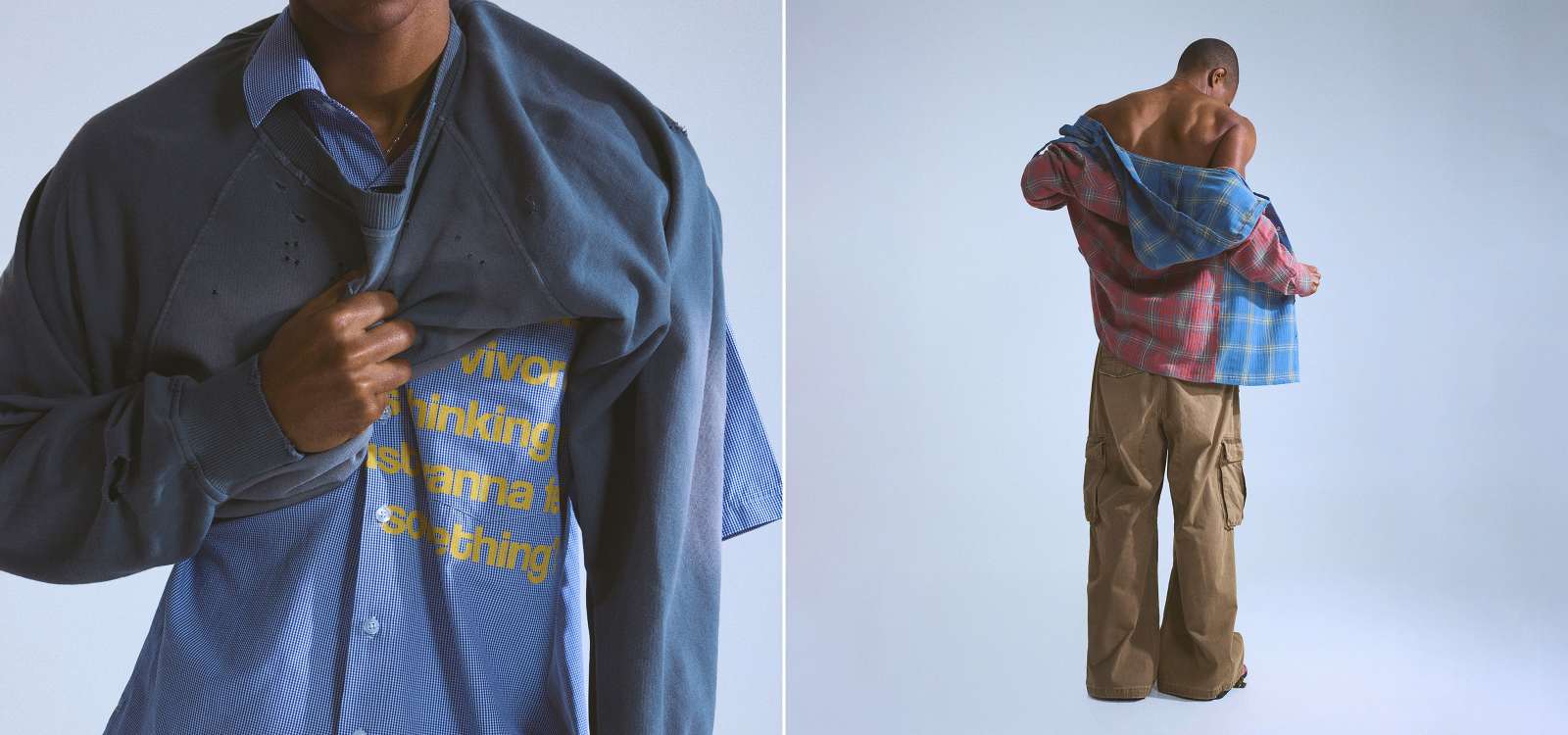
(Jaded London)
“Young Brad Pitt Outfits”, “Jennifer Aniston 90s outfit”...
If I could count the number of times I searched up those two lines for fashion inspiration, I would probably have at least $1000. Over the last century, there has been a notable increase in pop-culture media consumption, from the meteoric rise of celebrity culture in film, television, and magazines to the modern era of social media and invasive paparazzi coverage that can turn even a casual moment into global news. This constant visibility has opened our devices to a seemingly endless stream of celebrity photos and videos that people can draw inspiration from when putting together an outfit. Where earlier generations may have relied on magazines like GQ or Vogue, today, inspiration is only a few taps away.

The rise of visual discovery platforms such as Pinterest has dramatically accelerated this process. According to platform data, Pinterest experienced significant growth during the mid-2010s as smartphones and image-based social media platforms became increasingly popular. By 2016, the platform had already reached over 150 million monthly active users, and downloads continued to grow steadily in the following years (Business of Apps, 2024). At the time, however, Pinterest was not primarily associated with fashion inspiration in the way it is today. Instead, many users viewed it as a platform for home décor, DIY projects, recipes, and office aesthetics. It functioned in many ways as a visual archive or idea board rather than a fashion reference library.
However, this began to change in the late 2010s and accelerated dramatically during the COVID-19 pandemic. During this period, people were spending significantly more time online and began searching for creative outlets while confined at home. Pinterest experienced a surge in engagement as users increasingly turned to the platform for inspiration across multiple areas of life, including fashion. In tandem with this growth, TikTok emerged as a dominant cultural force. TikTok’s short-form video format allowed creators to translate static Pinterest images into dynamic outfit recreations and styling experiments.
This combination created a feedback loop between the two platforms. Pinterest became a source of visual inspiration, while TikTok became a performance space for styling interpretation. A key creator who took advantage of this dynamic was Wisdom Kaye. Kaye frequently used Pinterest images as references, recreating or reinterpreting them in his own style through TikTok videos. His content popularised a format in which creators drew inspiration from curated Pinterest boards and transformed them into wearable outfits. The trend spread rapidly and helped normalise the practice of building personal “fashion archives” through curated boards.
The result was a perfect storm that conditioned new Pinterest users to catalogue outfits, aesthetics, and styling references. Over time, this led to a broader revival of past pop-culture fashion moments, particularly from the 1980s, 1990s, and early 2000s. Through digital curation, entire generations began rediscovering the wardrobes of icons such as Brad Pitt, Princess Diana, and JFK Jr., turning them into reference points for contemporary styling.

Why is inspiration so important?
What we often do not realise is that this behaviour taps into a deeply primal aspect of human psychology: the desire for inspiration and imitation. Humans are naturally inclined to observe others, internalise visual cues, and adapt them into their own identities. Inspiration functions as a psychological breeding ground for ideas, allowing individuals to experiment with identity, self-expression, and social belonging.
Research in fashion psychology suggests that clothing is far more than functional fabric; it plays an important role in shaping identity, regulating emotions, and influencing social perception. Three key psychological concepts help explain why inspiration is so powerful.
1. Symbolic Identity Construction & Expression
Clothing functions as a symbolic language through which individuals communicate who they are or who they aspire to be. When people browse Pinterest boards or celebrity outfits, they are not simply copying aesthetics; they are exploring possible versions of themselves. Fashion psychologists argue that styling choices signal aspects of identity such as personality, cultural affiliation, and social belonging. Inspiration, therefore, acts as a tool for identity construction. By collecting visual references, individuals begin to refine their personal aesthetic and align their external appearance with their internal self-concept.
2. Enclothed Cognition & Self-Regulation
Another reason inspiration is important lies in the psychological phenomenon known as enclothed cognition, which refers to the influence clothing has on a wearer’s cognitive processes and emotional states. Studies show that what people wear can affect confidence, attention, and behaviour. When individuals draw inspiration from outfits that embody traits such as confidence, professionalism, or creativity, wearing similar styles can psychologically reinforce those traits. In this sense, fashion inspiration serves as a tool for self-regulation: people use clothing to shape how they feel and act.
3. Social Perception & Status Navigation
Clothing also plays a critical role in how others perceive individuals. Research on person perception suggests that observers rapidly make judgments about status, competence, and personality based on appearance cues. Drawing inspiration from admired figures, whether celebrities, influencers, or historical icons, can therefore be a strategic way to navigate social perception. Inspiration enables individuals to adopt visual cues associated with confidence, success, or cultural relevance, shaping how they are perceived in social settings.
Recently, however, I have begun to notice that many people, including myself, have grown slightly tired of the endless recycling of 1990s celebrity outfit inspiration. For years, Pinterest boards and TikTok fashion accounts were filled with variations of Brad Pitt’s casual leather-jacket looks or JFK Jr.’s minimalist preppy outfits. While these looks remain timeless, the repetition has gradually made them feel less novel.

This shift was subtly hinted at around 2024, when many vintage-focused creators began experimenting with pieces inspired by early-2000s fashion. The early 2000s represent a very different aesthetic landscape compared to the minimalism of the 1990s. Fashion during this period was characterised by bolder silhouettes, experimental layering, oversized fits, graphic logos, and a strong influence from hip-hop and streetwear culture. As this era continues to be rediscovered, it may signal the next phase of fashion inspiration cycles, where digital archives like Pinterest no longer just revive nostalgia but actively reshape it.
Finally, we arrive at skinny jeans.
With the resurgence of Y2K fashion, we are edging dangerously close to its revival. Designers have already begun experimenting with the silhouette, most notably Gucci, Dior, and Rick Owens (though Rick Owens abandoning skinny silhouettes would have been the real surprise). However, these reinterpretations do not simply recreate the skinny jeans that many people still recall with second-hand embarrassment. Instead, they attempt to honour the original silhouette while refining its artistic and structural purpose.
In Gucci’s recent runway show, slimmer silhouettes were presented with a sense of confidence and intention, styled in a way that felt distinctly modern while still acknowledging the legacy of the skinny fit. Dior offered a similarly compelling example in 2025, using narrow trousers to accentuate the models’ broader upper silhouettes. This contrast created a far more balanced visual design than many skinny-jean looks achieved in the 2000s and early 2010s.
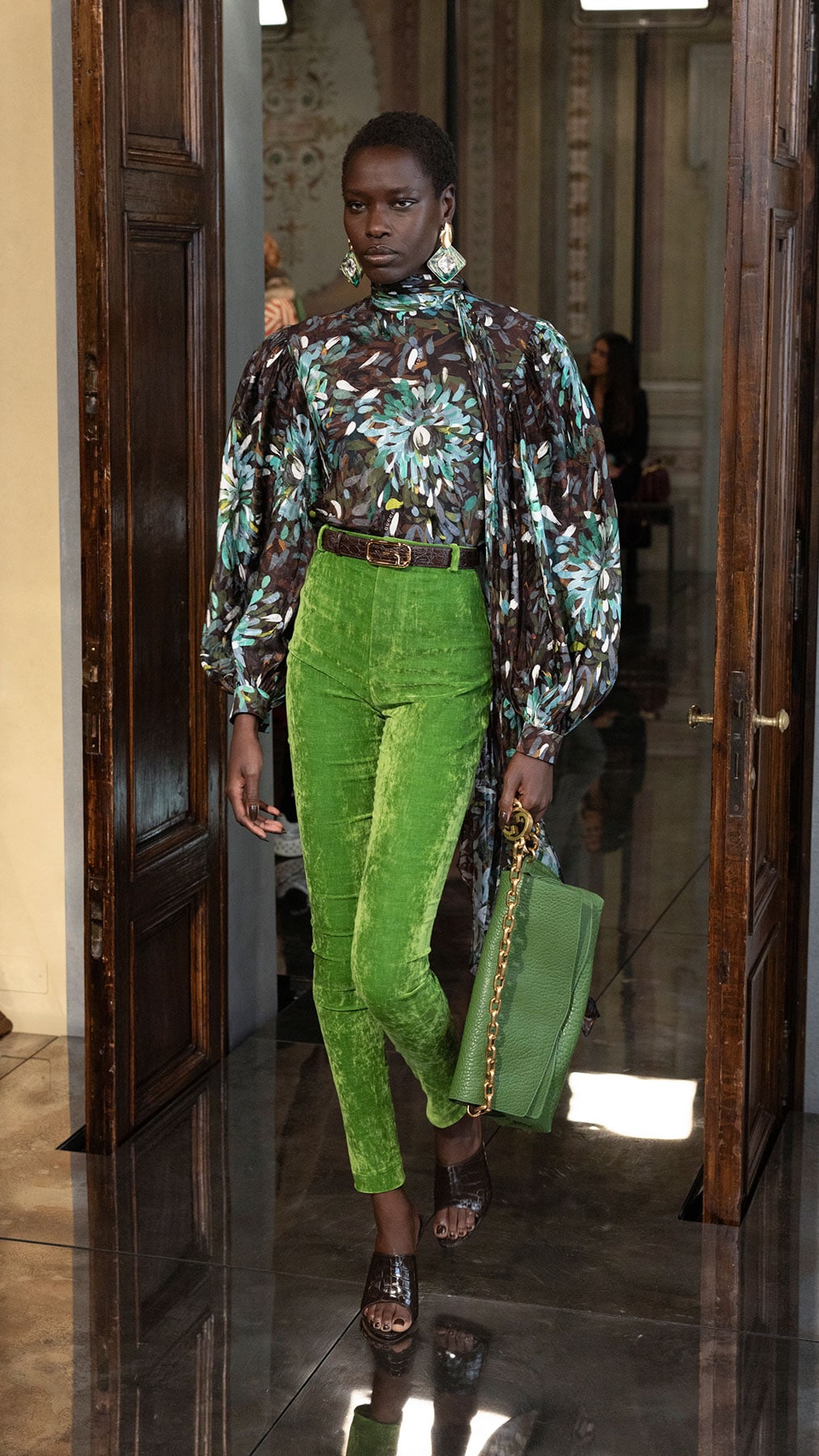

And then there is Rick Owens, perhaps the last ronin of skinny silhouettes. Owens has long built his designs around elongated, narrow proportions, a philosophy influenced in part by his own body shape and aesthetic sensibilities. Even as the broader fashion world moved away from skinny fits, Owens quietly continued refining them. His collections have consistently retained elements of slim silhouettes, preserving their identity even during the height of wide-leg dominance.

So where does that leave skinny jeans?
They’re likely coming back, but differently this time. More refined. More intentional. More suited to the modern context of fashion. They may never replace the comfort and versatility of a well-designed pair of loose jeans, but they will almost certainly re-enter the rotation. Rather than dominating wardrobes the way they once did, skinny silhouettes will add depth and variety to the next decade of style.
So don’t be surprised if you start seeing more early-2000s Brad Pitt and Jennifer Aniston outfit recreations walking down the street again once skinny silhouettes fully return.